2 hr 30 min
Lisbon Azulejo Tile Design Workshop
Design and create your own Portuguese ceramic tile using traditional patterns and modern techniques
Reserve
Hand-picked by our editors — only the best 5 workshops from 23 reviewed.
Verified partners for every tour, free cancellation where available, and instant confirmation on every booking.
2 hr 30 min
Design and create your own Portuguese ceramic tile using traditional patterns and modern techniques
Reserve
2 hr 30 min
Design and paint a traditional ceramic tile in a Lisbon gallery using authentic techniques
Reserve
1 hr
Paint authentic azulejo tiles using traditional majolica techniques in Lisbon's historic center
ReservePrices from verified partners. Availability updates in real time at checkout. Free cancellation policies apply where shown.
The landmarks, rooms, and views travelers on this tour remember — all visible on a single visit.
Learn the history of Portuguese decorative arts through classic motifs and designs.
They complement each other; most visitors who do both call the hands-on azulejos tile painting workshop lisbon the more personal experience, while the museum provides essential cultural context for these historic ceramic landmarks.
| Feature | Top pick Painting Workshop | National Tile Museum |
|---|---|---|
Experience Type |
Creative participation | Historical observation |
Engagement Level |
Active artistic practice | Self-guided cultural study |
Location |
Rua Ernesto da Silva, 52B | Rua da Madre de Deus 4 |
Primary Benefit |
Take-home ceramic souvenir | Exposure to master craftsmanship |
Time Investment |
1.5–3 hours | 2–4 hours |
Accessibility |
Appointment required | Walk-in entry permitted |
Instruction |
Professional artisan guided | Audio guide or self-paced |
| See tickets → |
Verdict: If you seek a personalized keepsake, azulejos tile painting workshop lisbon tours offer unique value, whereas those prioritizing the evolution of Portuguese ceramic art should secure azulejos tile painting workshop lisbon tickets for the museum as well.
Choose your ticket, select your date, and reserve in under two minutes. Secure checkout handled by our verified partner.
Instant confirmation by email, with a mobile voucher you can save offline. No printing, no queuing at a collection desk.
Arrive at the entrance, show your voucher on your phone, and walk in. Most tickets include priority or skip-the-line access.
Practical details for your visit straight from our verified partners — hours, access, rules, and how to get there.
Casual and comfortable attire is recommended for an azulejos tile painting workshop lisbon experience. Wear clothes you do not mind getting a bit of clay or paint on.
Small bags are permitted inside A Casa do Azulejo. Large luggage should be left at your accommodation as there is no on-site storage.
Photography is encouraged during your azulejos tile painting workshop lisbon visit to document your creative process. Respect the privacy of other participants if they prefer not to be filmed.
The studio is located on the ground floor, making it accessible for visitors with limited mobility. Please notify the host in advance if you require specific assistance.
The azulejos tile painting workshop lisbon is suitable for children aged 12 and older. Younger children may find the fine motor skills required for intricate tile designs challenging.
Complimentary water, coffee, and cookies are often provided by the host. Outside food is generally discouraged to keep the workspace clean and focused.
Best time to go, insider tips, nearby landmarks, and the cancellation fine print — flip through to skim what matters to you.
Flexible, no hidden fees.
Class cancellations must be requested up to 48 hours in advance for a refund. No standard entry fee applies for visiting, but workshops range from 35 to 60 EUR per person.
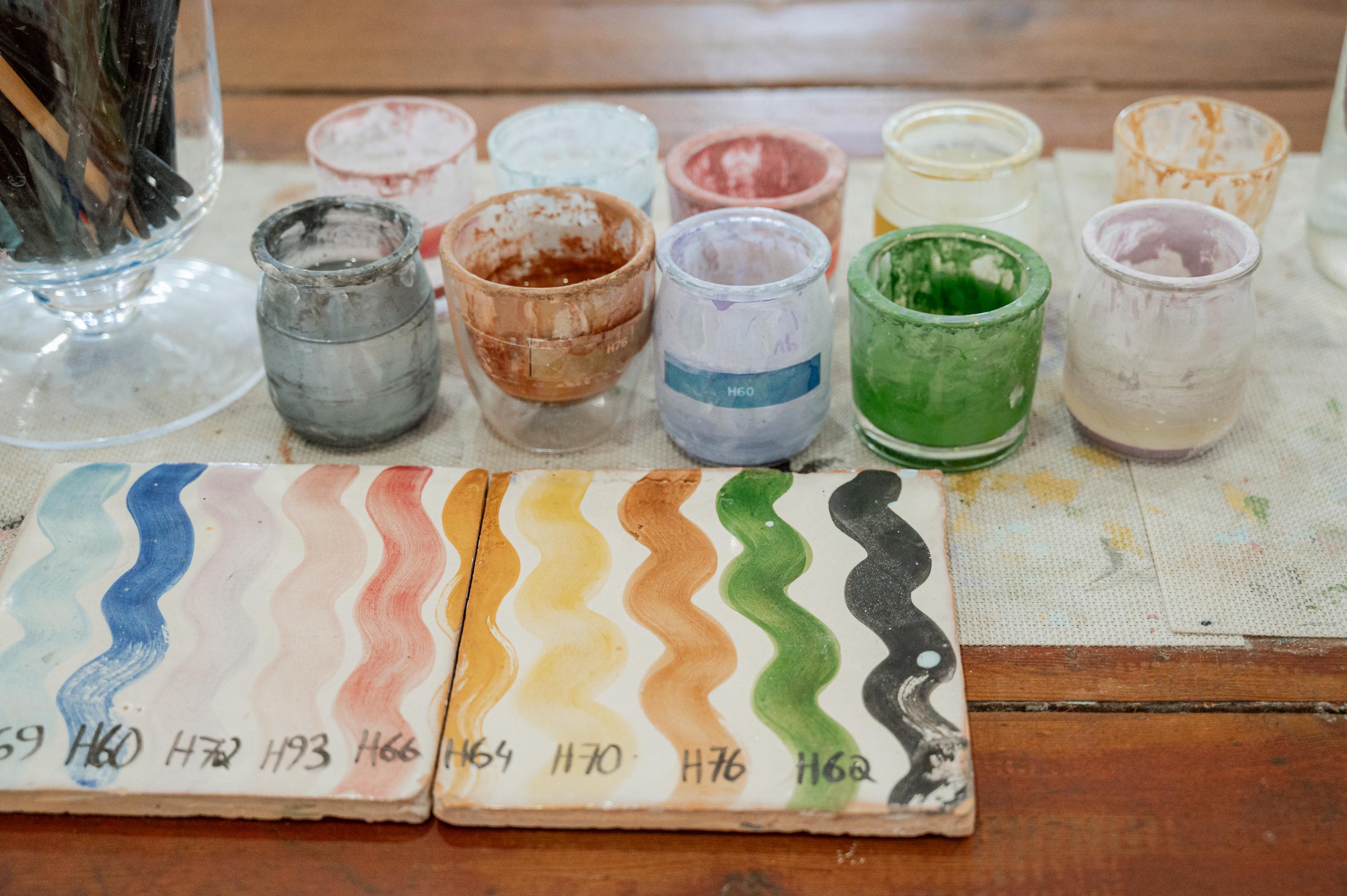
A single 15-centimetre ceramic square can hold 400 years of Portuguese history. The azulejo — from the Arabic al-zulayj, meaning polished stone — arrived on the Iberian Peninsula in the thirteenth century, carried by Moorish artisans who clad palace walls in geometric mosaics. By the sixteenth century, Portuguese craftsmen had adapted the technique, flooding Lisbon's churches, convents, and manor houses with hand-painted biblical scenes, maritime charts, and botanical studies rendered in cobalt oxide on tin-glazed earthenware. The 1755 earthquake destroyed much of the city's architectural record, but azulejos survived where timber and plaster did not, leaving intact narratives on standing walls that still guide urban archaeology today. Modern Lisbon holds more than 80,000 square metres of historic tilework, the largest collection of decorative ceramics in Europe. Façades along Rua do Alecrim and Travessa da Queimada display nineteenth-century industrial panels — factory-produced but hand-finished — while Palácio dos Marqueses de Fronteira retains 1670s allegorical gardens in polychrome majolica. The National Tile Museum catalogs five centuries of production, but workshop studios scattered through Mouraria and Graça neighbourhoods keep the craft in daily practice. Artisans still mix pigments from cobalt, manganese, and copper oxides, apply designs with animal-hair brushes, and fire tiles in electric kilns calibrated to replicate the 980-degree Celsius temperatures of wood-burning ovens. Azulejos tile painting workshop Lisbon sessions teach the full sequence: stencil transfer or freehand sketching onto biscuit-fired tile, pigment application in layers that dry matte but emerge glossy post-firing, and glaze chemistry that transforms earthy browns into Mediterranean blues. Workshops occupy century-old studios near São Vicente de Fora, spaces where plaster dust settles on worktables scarred by generations of tile cutters. Participants work with the same cobalt blue that colored sixteenth-century altar panels, the pigment imported from Saxony mines until Portuguese chemists synthesized it in the 1920s. Each tile requires two hours of painting and 18 hours of kiln time; finished pieces are collected within a week or shipped internationally. The craft persists because Lisbon mandates azulejo restoration on landmark façades, creating steady demand for trained ceramicists. Private commissions — kitchen backsplashes, courtyard murals, commemorative panels — fund the workshops that also teach tourists and design students. A traditional tile painting Lisbon experience bridges museum observation and hands-on material literacy, translating cobalt lines on historical walls into the physical resistance of a loaded brush, the capillary pull of porous ceramic, and the irreversible commitment of oxide to glaze.

"A single 15-centimetre ceramic square can hold 400 years of Portuguese history."
A step-by-step walkthrough of the visit — what you'll see, how long each stage takes, and the details that matter.
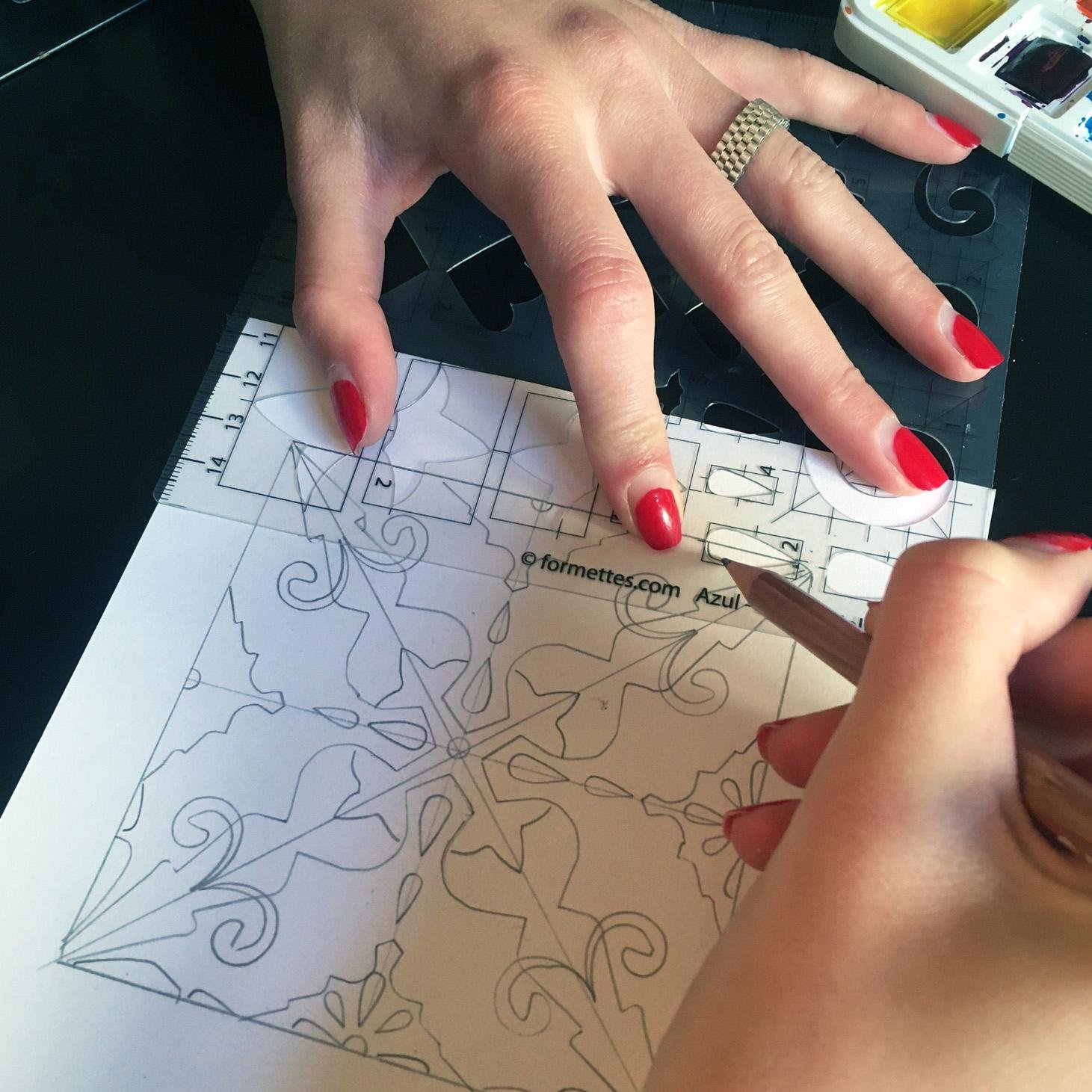
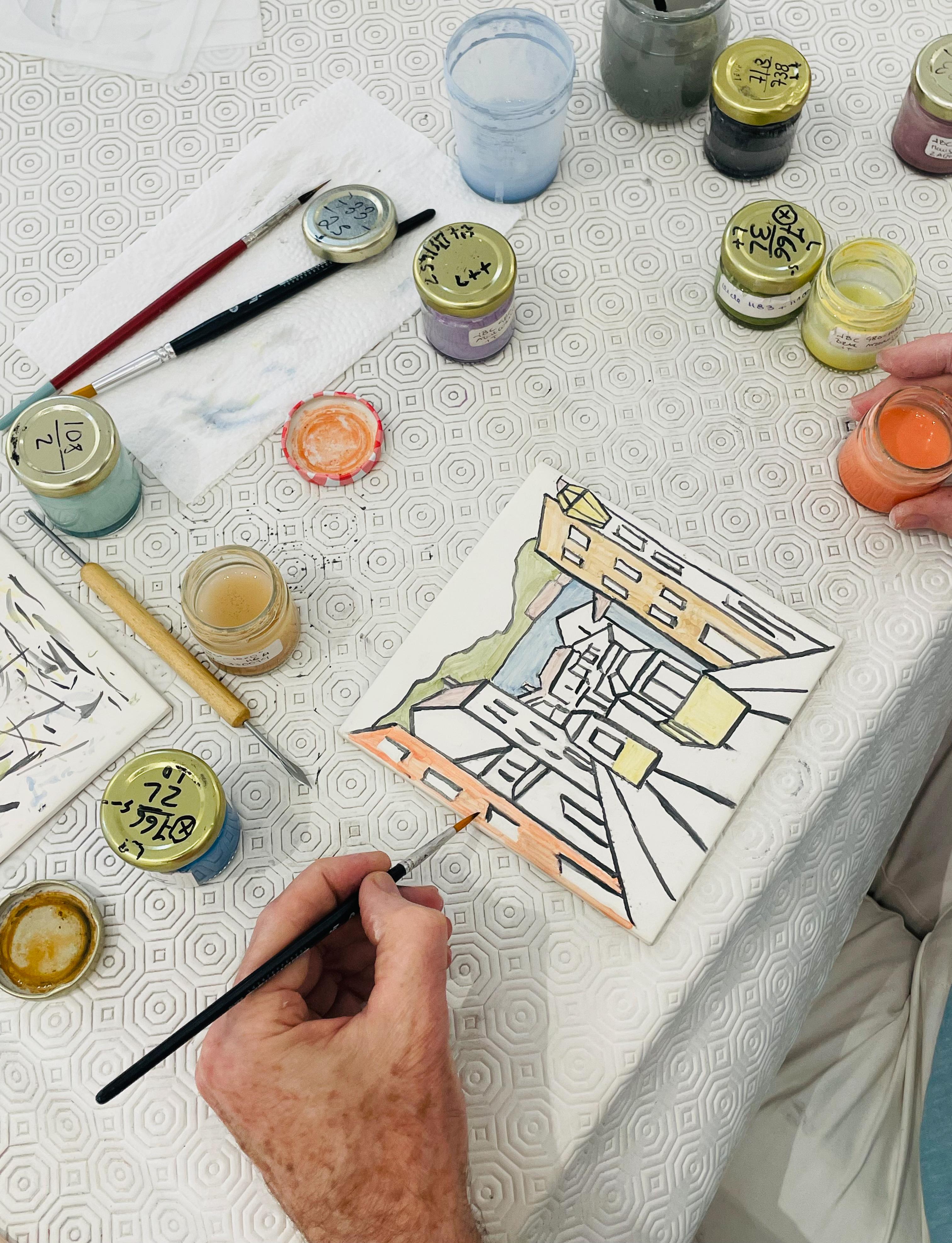
You arrive at a workshop studio on Rua Ernesto da Silva mid-afternoon, stepping into a ground-floor atelier where bisque-fired tiles cool on metal racks and kiln heat lingers near the back wall. The instructor — a third-generation ceramicist — sets a 15-centimetre white square in front of you alongside a tray of cobalt oxide pigment, three sable brushes, and a printed pattern sheet showing geometric motifs from seventeenth-century convents. You choose between tracing a stencil or sketching freehand; most beginners start with the former, securing the paper template with low-tack tape and dusting charcoal through perforated lines. The pigment arrives as a grey-brown powder mixed with water to the consistency of ink. You load the finest brush and begin outlining, discovering immediately that the porous tile wicks moisture faster than paper, forcing deliberate strokes without hesitation or correction. The instructor demonstrates how to vary line weight by adjusting pressure, how to fill enclosed shapes with a stippling motion, and why cobalt-rich areas must dry fully before adjacent sections are painted to prevent bleed. Midway through, you step back; the matte grey design offers no preview of the final ultramarine that will emerge from the kiln's reduction atmosphere. After 90 minutes, your tile is complete. The instructor applies a clear glaze by spray gun, then slides the piece into the next firing batch. You arrange collection for the following week or provide a mailing address; the tile ships wrapped in bubble wrap and cardboard, arriving with a certificate noting the firing date and kiln temperature. Back on the street, your hands smell faintly of mineral spirits and dust.
No prior drawing experience is required for an azulejos tile painting workshop lisbon, as the instructor provides guided patterns and templates.
Children must be at least 12 years old to participate in the azulejos tile painting workshop lisbon at A Casa do Azulejo.
Yes, all necessary paints, tiles, and post-workshop firing processes are included in the price of your azulejos tile painting workshop lisbon tickets.
The studio is located at Rua Ernesto da Silva, 52B, accessible via local transit or taxi.
The azulejos tile painting workshop lisbon is open on Saturdays from 10:30–12:30 and 15:00–19:00.
Yes, you can easily combine your azulejos tile painting workshop lisbon visit with exploring other nearby cultural landmarks.
Most sessions last between 2 to 4 hours depending on the complexity of the tile work chosen.
Cancellations for an azulejos tile painting workshop lisbon tour must be made at least 48 hours before the scheduled time.
While there are various ceramic studios, A Casa do Azulejo specializes in traditional hand-painted techniques.
Booking ahead is highly recommended to secure your spot during the best arrival window of 10:30–19:00.